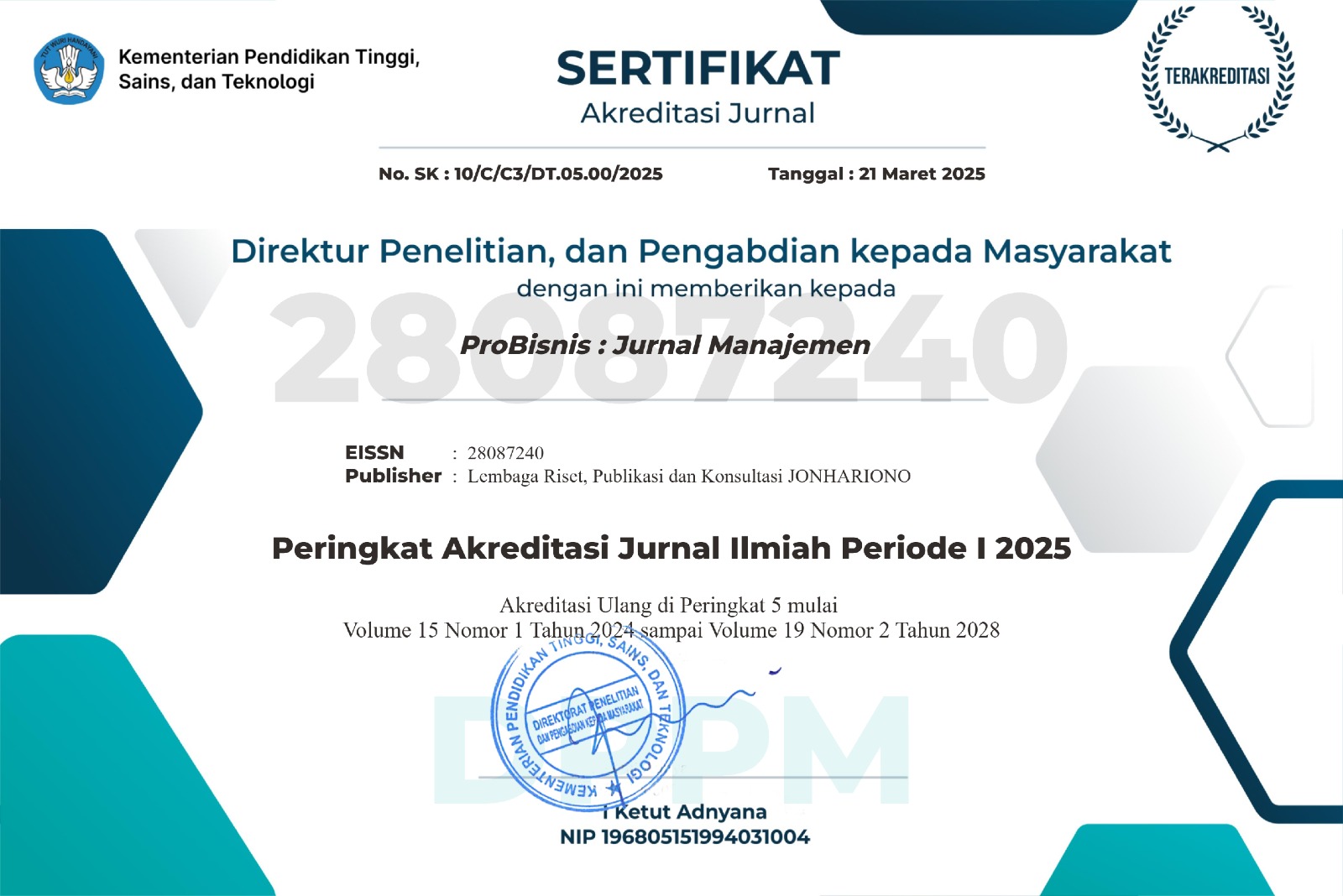
Analysis of Consumer Behavior in Choosing the ZPay Application as a Digital Transaction Service (Case Study at PT. ZPay Komunika Indonesia Gunungsitoli)
Keywords:
Consumer Behavior, ZPay, Digital Transactions, Purchase Decision, Qualitative StudyAbstract
Amidst increasing competition in the digital payment market, ZPay, operated by PT. ZPay Komunika Indonesia in Gunungsitoli, faces challenges in maintaining user preference. This study aims to analyze consumer behavior in choosing ZPay as a digital transaction service, focusing on factors influencing decision-making and the stages of the decision process. Using a qualitative case study approach, data were collected through observations, in-depth interviews, and documentation involving active ZPay users, the company owner, employees, and customers. Findings reveal that cultural, social, personal, and psychological factors significantly influence consumer choice. Key considerations include ease of use, transaction security, social influence, and positive prior experiences. The decision-making process comprises need recognition, information search, evaluation of alternatives, purchase decision, and post-purchase behavior. This research provides practical insights for ZPay in developing consumer-focused marketing strategies and contributes to academic literature on digital consumer behavior. The study emphasizes the importance of aligning services with consumer expectations to enhance satisfaction, loyalty, and competitiveness in the rapidly evolving digital economy.
References
Bryman, A. (2016). Social research methods (5th ed.). Oxford University Press.
Creswell, J. W. (2014). Research design: Qualitative, quantitative, and mixed methods approaches (4th ed.). SAGE Publications.
Davis, F. D., & Venkatesh, V. (1996). A critical assessment of potential measurement biases in the technology acceptance model: Three experiments. International Journal of Human–Computer Studies, 45(1), 19–45. https://doi.org/10.1006/ijhc.1996.0040
Kotler, P., & Keller, K. L. (2016). Marketing management (15th ed.). Pearson Education.
McKenzie, S., et al. (2020). Customer loyalty in digital payment platforms: Determinants and managerial implications. Journal of Retailing and Consumer Services, 54, 102030. https://doi.org/10.1016/j.jretconser.2019.102030
Miles, M. B., Huberman, A. M., & Saldaña, J. (2014). Qualitative data analysis: A methods sourcebook (3rd ed.). SAGE Publications.
Oliver, R. L. (1999). Whence consumer loyalty? Journal of Marketing, 63(Special Issue), 33–44. https://doi.org/10.1177/00222429990634s105
Palinkas, L. A., Horwitz, S. M., Green, C. A., Wisdom, J. P., Duan, N., & Hoagwood, K. (2015). Purposeful sampling for qualitative data collection and analysis in mixed method implementation research. Administration and Policy in Mental Health and Mental Health Services Research, 42(5), 533–544. https://doi.org/10.1007/s10488-013-0528-y
Patton, M. Q. (2015). Qualitative research & evaluation methods (4th ed.). SAGE Publications.
PwC. (2021). Emerging trends in the digital payments market in Indonesia. PricewaterhouseCoopers.
Schiffman, L. G., & Kanuk, L. L. (2007). Consumer behavior (9th ed.). Pearson Education.
Shabrina, G. Y., & Dwijayanti, R. (2021). The influence of service features and sales promotion on purchase decisions of food and beverages on OVO users. Jurnal Manajemen Pemasaran, 15(2), 95–105. https://doi.org/10.9744/pemasaran.15.2.95-105
Yin, R. K. (2018). Case study research and applications: Design and methods (6th ed.). SAGE Publications.
1.jpg)